
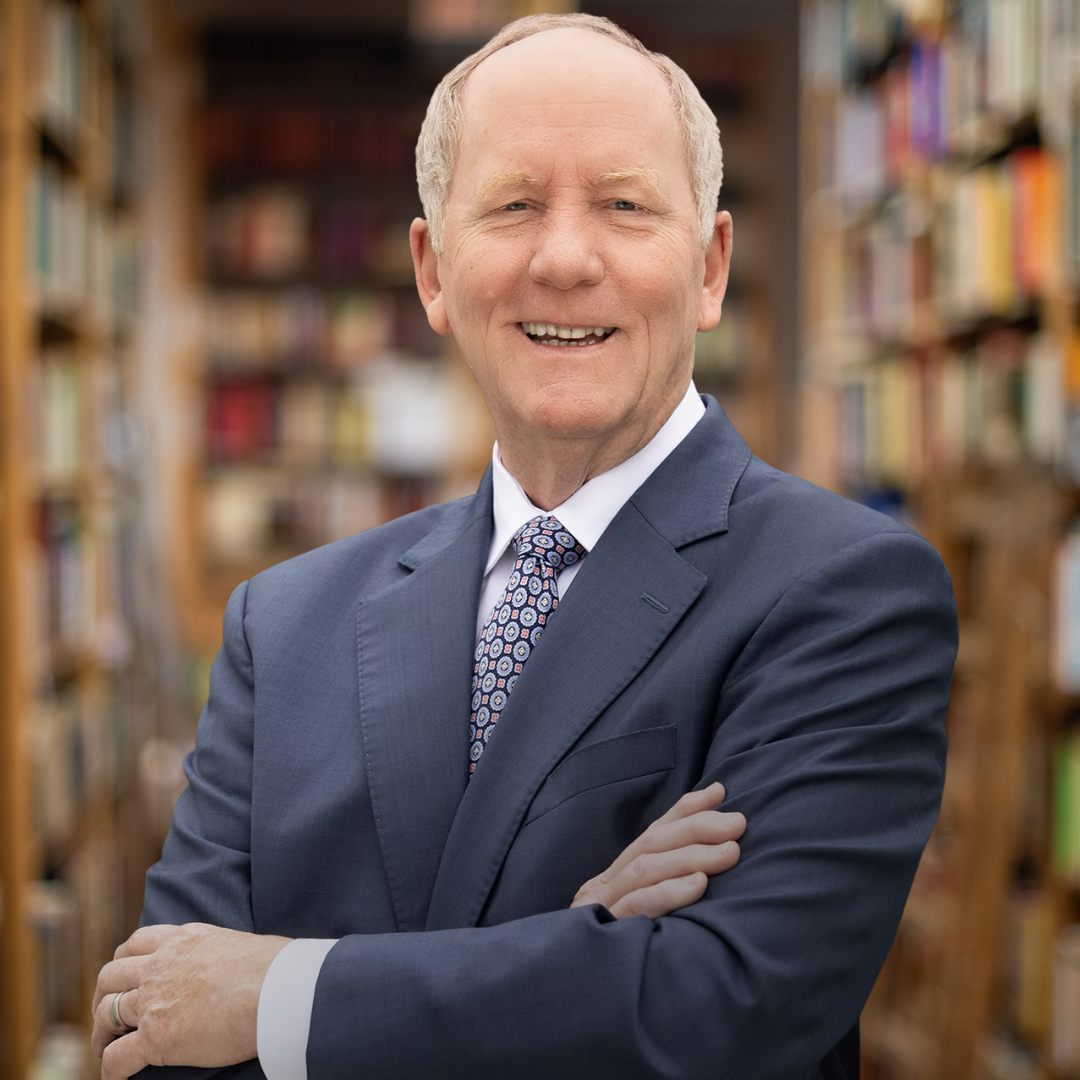
Dennis McNamara - District 7
1. Why do you want to be on the School Board?
I am pursuing this role in order to help focus the full Board and the District on the #1 LCAP goal: Elevate academic achievement. Per the latest full year data available, 2024-25, only 48% of students test as grade level proficient or better in ELA and just 36% in math. For those deemed socio-economically disadvantaged, the numbers fall to 35% and 23%. We must do better, much better for all students, especially the ones without noisy advocacy.
2. What qualities do you have that will make you an effective board member?
I am a good listener, I ask a lot of questions. I seek out opinions of those closest to the information or problem. I know that trust begins with honesty, which means openly facing, not wishing away, uncomfortable facts. I understand complex organizations.
From a technical perspective, I bring financial expertise. I have a University of Chicago MBA, am a Chartered Financial Analyst ® (CFA), and I have years of experience working through actual budgets and negotiating cuts when necessary.
3. What do you see as PUSD’s greatest opportunities and challenges?
Our greatest opportunity derives from our amazing community support. Taxpayers have authorized $1.4 billion for facilities modernization and about $5mm in parcel taxes for annual operations. This gives us the confidence to forge a true vision of modern education - curriculum, services, and facilities- to provide a first rate learning experience for generations of students.
Our challenges are numerous but derive primarily from declining enrollment, a decline projected to continue for years. This creates funding pressure and pulls attention away from goal number one: achieving proficiency across core academic subjects.
4. A characteristic of an effective school board is that it allocates resources to the greatest needs. Given the ongoing budget concerns and declining enrollment, what are your top funding priorities?
My priorities are to fully support activities and services that directly impact students. These are classroom instruction, on-site services, and student enrichment experiences such as arts, athletics, and clubs. These have to be protected, and then we work backward from the student experience.
5. As a school board member, how would you ensure that PUSD is meeting the needs of ALL students and their families?
My focus will always be about outcomes, not inputs. One narrative has been to ensure equitable access to programs and such. That has proven insufficient to lift all students. We need to think about what is needed to drive equitable outcomes. That will mean differential inputs. One ‘simple’ idea is to start every regular school board meeting with a discussion on academic progress. Not just occasionally, and not late in the evening. Every regular meeting and early. Let’s make academic progress a true priority for all student groups.
Let’s consider adding aides to support teachers with student populations that need the most help.
I want to hear from our educators what is working, what is not working, and what we need to amplify in order to drive achievement.
6. What is the role of the school board in relation to keeping the Superintendent and the district executive leadership accountable?
The Board walks a fine line between support and advocacy, and true accountability of the superintendent and the senior leadership team. My view is that the Board needs to be much more explicit and transparent as to the evaluation criteria for the role of superintendent.
As a close observer of PUSD, I feel the Board shies away from accountability and certainly shuns transparency. I certainly understand some matters must be kept confidential, truly, but the most recent evaluation of the superintendent left me confused.
At the June 11, 2026 Board meeting, the evaluation of the superintendent was conducted in closed session. The public comment by the Board president was the evaluation was approved 6-1. No mention of criteria, no mention of progress. No mention of satisfactory or unsatisfactory. The role of superintendent is complex and difficult. We can’t expect perfection. But we can expect explicit goals, measurement of progress and transparency.
7. PEN and other parent organizations serve as intermediaries between the district and families. How would you use those relationships, and what would you expect from organizations like PEN in return?
One of the great strengths of PUSD is the cornucopia of support services supplied by our engaged citizens through organizations such as PEN. My sense is that each group has a mission to fill a particular gap, to supplement what the district is doing, or in some cases, is unable to do. While PEN knows PEF, knows LEARNS, knows AAPC, and such, it doesn’t feel like we are cohering as a collective. I would like to bring us together as a full team in support of PUSD. Be a true force multiplier.
8. What experience do you have working collaboratively with different kinds of people and how would you build consensus among your fellow board members and the diverse stakeholders that make up our school district?
In my professional life, I was known as the ‘one to talk to’ to help forge consensus or help figure out who knows the most about a given situation. I built a reputation as a fair arbiter. Always about the mission, not about me. People felt ‘safe’ with me.
All candidates say they are ‘student focused’ although the meaning of that phrase may differ amongst us. For me, my number one goal is to improve academic outcomes, especially for those least advantaged. That represents obvious common ground with most, if not all Board members.
I know each of the sitting board members on a personal basis. I know the District leadership. They all know I am deeply involved in the district, as a Math Path Power Hour volunteer at Washington Elementary and as chair of the Citizens’ Oversight Committee. They all know I have been ‘walking the walk’. I listen, focus on outcomes, and want what is best for students. It will never be about me.
Another level of collaboration is with civic leaders. I know (and am endorsed by) Pasadena city council members because I know that PUSD and our civic leaders serve the same community! I built those relationships which particularly help in tough times.
9. If you have children, where do they attend school, or if they’ve graduated from high school, where did they attend school?
I sent my three children through public schools. My eldest attended Glendale Unified schools K-2, then 3-12 in La Canada Unified. My other two children attended La Canada Unified schools, K-12. My grandchildren attend public schools.
Learn more about Ms. Elias at her website: https://www.dennisforpusd.com/